
Tangible technologies to transform learning in early childhood education and first grade. Applied research, participatory design, and real classroom integration.
Explore the project
Tangible technologies to transform learning in early childhood education and first grade. Applied research, participatory design, and real classroom integration.
Explore the project
CETA develops and evaluates educational technologies that combine physical objects with digital experiences, aiming to expand
interaction and feedback to support early learning. The project integrates applied research,
participatory design, and situated work in real classroom contexts, with a focus on early childhood education and the first years of primary school.
Our approach places teachers and educational communities at the center: we co-design proposals, iterate prototypes, and document
implementation and appropriation conditions. We aim for tools that are configurable by teachers, aligned with the curriculum, and sustainable
beyond direct intervention by the research team.
A core line of the project is inclusive education. We have designed accessible tangible experiences, developing a mathematics game prototype for children with visual impairments, and we are currently working on a literacy game with adaptations to support access and participation in the classroom.
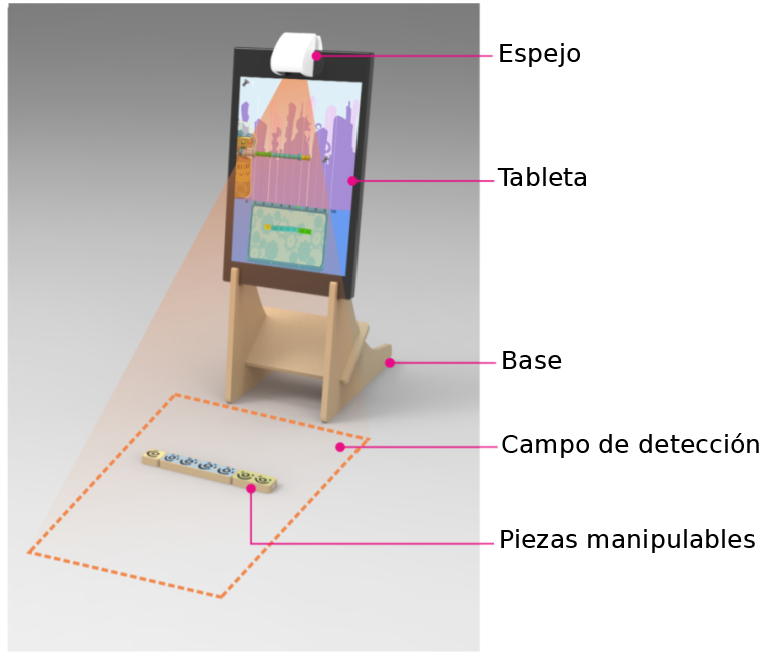
Tangible games and systems developed in the project, with examples of classroom use.
A tangible game focused on literacy, combining physical manipulation with digital feedback.
Number composition inspired by Montessori materials, in a gamified environment configurable by the teacher.
Computational thinking in early childhood education and first grade through tangible interaction.
Each member links to their CVUy (when available).